

Bookkeeping vs Accounting: What Your Singapore Company Needs
By Lucas Seah, Founder of Excellence Singapore Group | Last Updated: August 2026
Bookkeeping and accounting are not the same thing. Bookkeeping is the daily job of recording and organising every transaction; accounting is the work of interpreting those records to produce financial statements, file taxes, and guide decisions. Bookkeeping comes first and feeds accounting. Most Singapore companies need both, usually from the same provider.
This guide explains what each role actually does, the key differences, exactly what each one files with IRAS and ACRA, whether your company needs both, and what the two typically cost.
Key Takeaways
- Bookkeeping records and organises transactions; accounting interprets that data to produce statements, file taxes, and advise.
- Bookkeeping is the foundation and runs monthly or quarterly; accounting is built on top of it and peaks at year end.
- Every Singapore company must keep proper accounting records for five years under the Companies Act, which is the bookkeeper’s domain.
- Accounting produces the year-end financial statements, GST returns, and the corporate tax filing that IRAS and ACRA require.
- Almost every active company needs both functions; small companies simply buy them bundled as one outsourced service.
Bookkeeping vs Accounting: The Short Answer
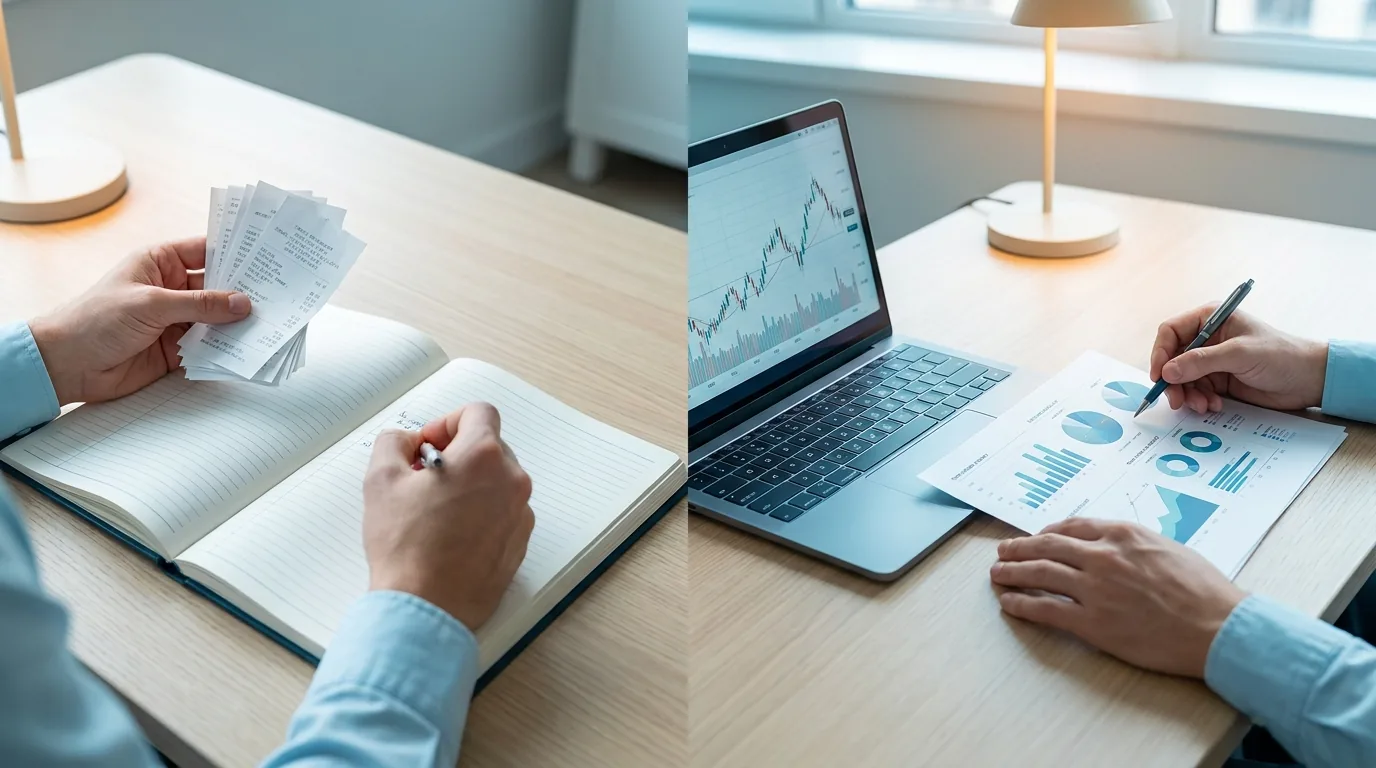
Think of it as two layers. The bookkeeper captures what happened, transaction by transaction, and keeps the records tidy and reconciled. The accountant takes those clean records and turns them into meaning: financial statements, tax computations, and advice on what the numbers say about the business. You cannot do good accounting on bad books, which is why the two are sequential rather than interchangeable.
What Does a Bookkeeper Do?
A bookkeeper handles the day-to-day recording of financial activity. The work is methodical and ongoing.
- Records sales, purchases, and expenses as they happen.
- Reconciles bank and credit card statements so the books match reality.
- Issues and tracks invoices, and monitors what is owed to and by the business.
- Organises receipts and source documents, which the law requires you to keep.
- Prepares the clean data that the accountant and the GST return rely on.
This is also where your statutory record-keeping duty lives. Under the Companies Act, every company must keep accounting records that explain its transactions, and both ACRA and IRAS require those records to be kept for five years. Good bookkeeping is what makes that duty effortless instead of a year-end panic.
What Does an Accountant Do?
An accountant takes the recorded data and turns it into compliance and insight. The work is analytical and tends to cluster around reporting deadlines.
- Prepares the year-end unaudited financial statements under the Singapore Financial Reporting Standards.
- Computes and files corporate tax, including the Estimated Chargeable Income and the annual Form C-S, C-S (Lite), or C with IRAS by 30 November.
- Reviews and finalises GST returns before they are e-filed.
- Converts financial statements to XBRL for ACRA where required, and advises on whether an audit is needed.
- Interprets the numbers: margins, cash flow, and tax planning, so the owner can make informed decisions.
In short, the bookkeeper keeps the score and the accountant explains what it means and files it with the authorities.
What Each One Files With IRAS and ACRA
The clearest way to see the difference is to map who is responsible for what. The table below shows where the bookkeeping work ends and the accounting work begins across your statutory obligations.
| Obligation | Mainly bookkeeping | Mainly accounting |
|---|---|---|
| Day-to-day transaction records (kept 5 years) | Yes | No |
| Bank reconciliation | Yes | No |
| Quarterly GST F5 return | Prepares the data | Reviews and files |
| Year-end financial statements (SFRS) | No | Yes |
| ECI and corporate tax (Form C-S / C) | No | Yes |
| XBRL conversion for ACRA | No | Yes |
| Annual return to ACRA | Provides figures | Confirms accounts |
Note that the annual return itself is a corporate secretarial filing, even though it draws on the accounts; see our corporate secretarial services guide for that side. The point of the table is that one function feeds the other, which is why most companies buy them together.
Does My Singapore Company Need Both?
For almost every active company, yes. You need bookkeeping because the law requires proper records and because your GST and tax filings are only as accurate as the underlying data. You need accounting because someone qualified has to prepare the statements and sign off the tax. The only question is how you resource it.
Very small or early-stage companies rarely hire two separate people. Instead they buy a single outsourced accounting service that includes both layers, which is far cheaper than employing even one in-house finance staff member. A dormant company needs very little of either, but still has to keep records and file. As the business grows and transaction volume rises, you might bring bookkeeping in-house on cloud software while keeping the accounting and tax outsourced to a qualified firm.
Bookkeeping vs Accounting Fees in Singapore
Bookkeeping is generally the cheaper line item because it is more routine, while accounting and tax work commands a higher rate for the qualification and judgement involved. In practice, small-business bookkeeping in Singapore runs roughly S$90 to S$300 a month, and a bundled service that adds year-end accounts and tax filing typically runs higher. We break the full picture down by company profile in our accounting services cost guide. If you would rather not manage either yourself, the accounting service bundles bookkeeping, accounting, and tax into one monthly fee.
Do I Need a Bookkeeper or an Accountant First?
Start with bookkeeping. From your first transaction you have records to keep, so the bookkeeping function is needed from day one, often set up when you register the company. The accountant becomes essential as your first financial year end and tax deadline approach, and earlier if you are GST-registered or need management accounts for financing. The two are not a choice between; they are a sequence, and the practical answer for most owners is to engage one provider that covers both from the start. For the full compliance backdrop, see our accounting compliance guide, and to plan the year-end, our guide to preparing for your financial year end.
Frequently Asked Questions
Is it better to do bookkeeping or accounting?
It is not an either-or. Bookkeeping and accounting are two stages of the same process: bookkeeping records the transactions and accounting interprets and files them. A company needs both. If you mean which to set up first, start with bookkeeping, because you have records to keep from your first transaction.
Do I need both a bookkeeper and an accountant?
Almost every active Singapore company needs both functions, but not necessarily two people. Small companies buy a single outsourced service that covers bookkeeping, year-end accounts, and tax. You only split the roles when transaction volume or complexity makes a dedicated in-house bookkeeper worthwhile.
Is a bookkeeper cheaper than an accountant?
Yes. Bookkeeping is more routine, so it is charged at a lower rate, while accounting and tax work commands more for the qualification and judgement involved. A bundled service is usually the most economical way to get both, since the provider shares the data across the two layers.
Can a bookkeeper file my company taxes?
Tax filing is accounting work and should be prepared or reviewed by a qualified accountant or tax agent, not handled by bookkeeping alone. The bookkeeper supplies the clean data; the accountant computes the chargeable income and files Form C-S or C with IRAS. In a bundled service the same firm does both.
Is AI replacing bookkeepers in Singapore?
Automation now handles much of the data entry and bank reconciliation, but it has not removed the need for a person to classify transactions correctly, judge unusual items, and keep the records defensible for IRAS and ACRA. The role is shifting toward review and oversight rather than disappearing.
What records must my company keep, and for how long?
You must keep accounting records and source documents that sufficiently explain your transactions and financial position. Both ACRA, under the Companies Act, and IRAS require these to be retained for five years from the relevant Year of Assessment. Keeping them in cloud accounting software makes this straightforward.
Talk to Us
Whether you need clean books, year-end accounts, or both, you should not have to become an accountant to run your company. Excellence Singapore provides bundled bookkeeping and accounting for Singapore SMEs from S$200 a month, so your records, GST, and tax filings all stay aligned and on time. Talk to us and we will set up both layers from day one.
