


















What equipment and machinery financing actually covers
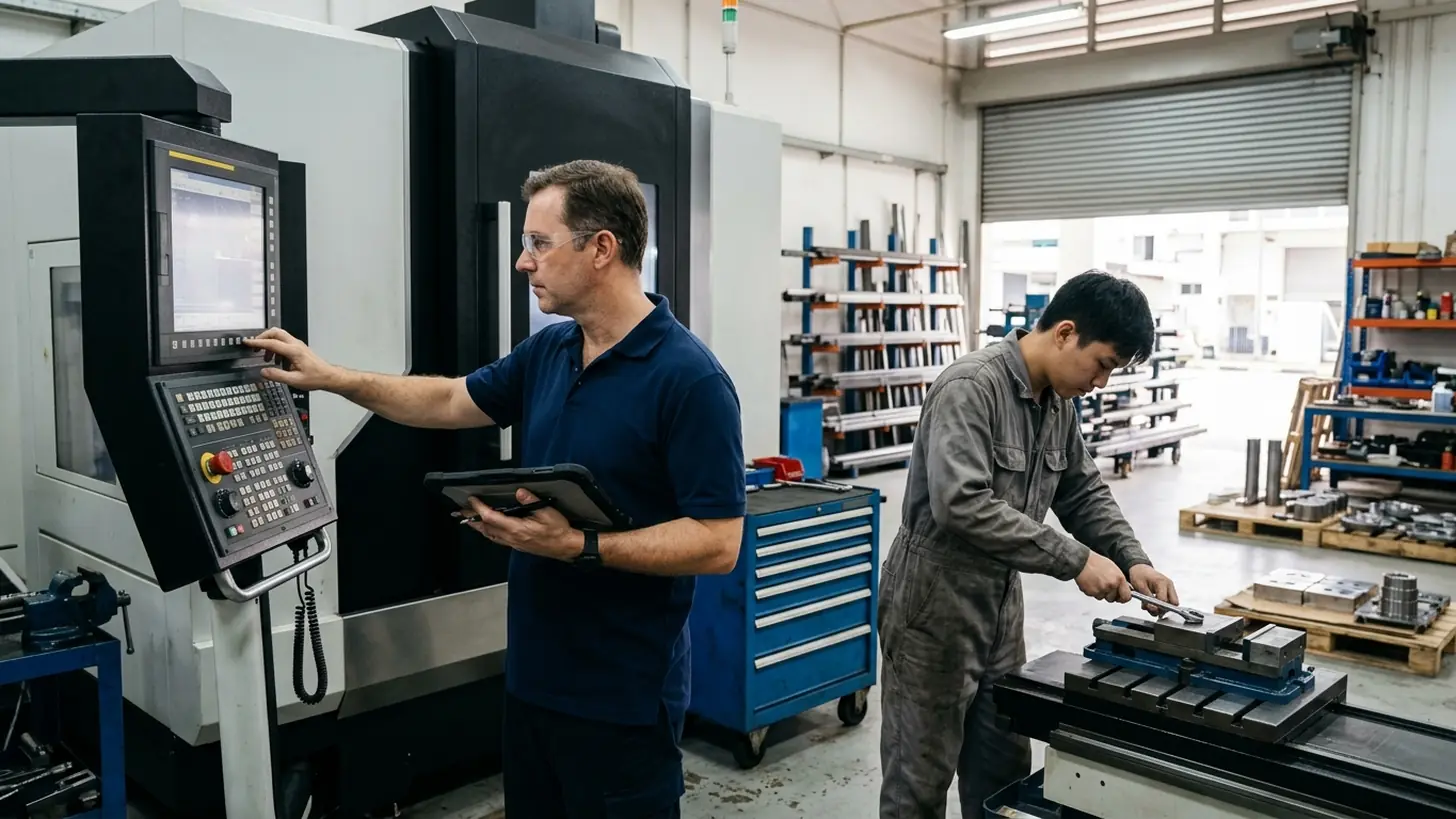
Equipment financing pays for a specific asset and is secured on that asset. Machinery for a workshop, a CNC or printing line, commercial kitchen equipment, forklifts and materials handling, vans and lorries, medical and dental equipment, IT hardware, generators, compressors, vessels. If it is a durable business asset with a resale market, it can usually be financed.
Because the asset itself is the security, this is often the easiest facility for a growing business to obtain. A lender who would not extend an unsecured term loan of the same size will frequently write an equipment deal, because it can repossess and resell the machine.
We are brokers, not a lender. We place equipment facilities with banks and licensed financial institutions, and our interest is in an approval you can service rather than in any one product.
Hire purchase, finance lease or term loan
Three structures fund the same machine, and they are not interchangeable. The choice changes who owns the asset, who claims the tax relief, and what appears on your balance sheet.
Hire purchase. The financier buys the asset and hires it to you across a fixed term. You take ownership at the end, usually on exercising an option to purchase. Almost always quoted at a flat rate, which is the subject of the next section.
Finance lease. You lease the asset for most of its useful life. Whether this is treated as a purchase for tax depends on the terms, and the answer surprises people. More below.
Term loan. You borrow, you buy the asset outright, you own it from day one. Under the Enterprise Financing Scheme this is the Fixed Assets route, whose per-borrower facility caps were removed on 1 April 2026. Equipment, machinery, vessels and machinery hire purchase are also supportable under the EFS Project Loan where the asset is tied to a contract.
The flat rate trap, and what your quote really costs
Hire purchase is quoted as a flat rate. A term loan is usually quoted as an effective rate. They are not comparable, and the gap is larger than almost anyone expects.
A flat rate charges interest on the original amount for the whole term, even though you are repaying principal every month and your balance is falling. An effective rate charges interest on what you actually still owe. As a rough rule, a flat rate comes out at close to double when converted to an effective rate: about 1.82 to 1.96 times over typical terms. Our effective interest rate calculator converts any flat-rate quote in seconds.
So a machine quoted at 3 percent flat over five years is not cheaper than a term loan at 5.5 percent effective. It is usually more expensive. A business comparing the two headline numbers side by side will pick wrongly almost every time, and this is the single most common costly mistake we see on equipment deals.
Ask any financier for the effective rate and the total amount payable over the full term. Those two numbers are comparable across every structure. The headline rate is not.
Capital allowances: the part that changes your actual cost
This is where an equipment decision stops being a financing question and becomes a tax question, and it is the reason to involve your accountant before you sign rather than after.
Capital allowances are how you write off a qualifying asset against taxable profit. Two routes exist under the Income Tax Act 1947. Section 19 gives an initial allowance of 20 percent plus annual allowances across the asset’s prescribed working life. Section 19A instead gives a flat write-off over three years, or one year for computers and prescribed automation equipment. You elect one or the other for an asset, and once you have claimed under section 19A you cannot go back to section 19 for that expenditure.
There is also a low-value asset write-off: any item costing no more than S$5,000 can be written off in one year, capped at S$30,000 of such claims per year of assessment. Assets above that cap are not lost, they simply go onto one of the other methods.
Now the part that matters for hire purchase, and it depends on which method you elect.
| Structure | Who claims capital allowances | What is deductible instead |
|---|---|---|
| Hire purchase | You do. Under section 19A the allowance follows the principal instalments and deposit you actually pay in each period. Under section 19 the initial allowance follows the principal paid, but the annual allowance is computed on the full original cost. | The interest element is an allowable business expense. Principal is not, because it goes to capital allowances. |
| Finance lease treated as a sale | You do, as lessee. The lessor gets none. | Interest is deductible. Principal repayment is not. |
| Finance lease not treated as a sale | The lessor does. You get none. | You deduct the full lease payments, interest and principal together. |
| Operating lease | The lessor does. | You deduct the contractual lease payments. |
| Outright purchase on a term loan | You do, on the full cost, claimable when the expenditure is incurred rather than when it is paid. | Loan interest is separately deductible. |
🔴 The trap in that table is the finance lease. Whether it counts as a sale is not a matter of what the agreement is called. Under the Income Tax (Income from Finance Leases) Regulations, a finance lease is treated as a sale if any one of several conditions is met, and the first of them is simply that the lessee has an option to purchase the asset. An option to purchase is the most common feature of equipment finance leases in Singapore. So a great many leases marketed as leases are, for tax, sales, and the capital allowances sit with you rather than the lessor.
Two more points that catch businesses out. Timing differs by structure: an outright purchase gives you the allowance on the whole cost as soon as the liability is incurred, while hire purchase under section 19A drip-feeds it as you pay. If you are in a profitable year and want the relief now, that difference is money. And the accounting standard does not decide the tax: adopting FRS 116 changes how leases appear in your accounts, but the interest and depreciation you book are added back and the tax still follows the contractual treatment.
On disposal, if you sell or write off the asset you calculate a balancing allowance or a balancing charge against its tax written down value. A balancing allowance is deductible; a balancing charge is taxable, capped at the allowances you were given.
Two restrictions worth knowing before you buy. Capital allowances are not available on most private passenger cars, including S-plated cars and Q or RU plated business cars, unless they are registered private hire or instructional vehicles. Vans, lorries, buses and motorcycles are fine, and a COE forms part of the vehicle cost. Separately, capital allowances are not given on expenditure funded by government or statutory board capital grants approved on or after 1 January 2021, which matters if you are pairing a grant with financing.
GST on hire purchase, and the mistake that costs you the input tax
GST on a hire purchase does not follow your instalments. The financier charges GST on the full value of the goods when the first instalment is invoiced or paid, whichever happens first, even though it keeps legal ownership until the end of the term. You need the cash for that at the start.
The interest is a separate, exempt supply, but only if it is separately charged and disclosed to you. Where a financier does not break the interest out, GST applies to the whole amount.
🔴 Two things that quietly cost GST-registered businesses money. First, a hire purchase involves three parties, and you need tax invoices from both the supplier and the financier to support your input tax claim. Missing one is a common cause of a disallowed claim. Second, if the financier is not GST-registered, you cannot recover the input tax at all on the supply made under the hire purchase agreement. That is worth asking before you choose a financier, and almost nobody does.
One reassurance: repossession is not a supply, so no GST arises on it.
What a financier actually assesses
The asset. What it is, whether it is new or used, and what it would fetch if resold. Standard machinery with a liquid secondary market gets better terms than bespoke equipment nobody else can use.
The supplier. Established dealers with service support make a lender comfortable. A one-off private import does not.
Loan to value and deposit. New equipment can often be financed close to the full cost. Used equipment attracts a larger deposit, and the older the machine the larger it gets.
Your ability to service it. The asset is the security, not the repayment. Lenders still want to see that the machine either earns or saves enough to cover the instalment.
Directors’ guarantees. Expect one on most SME equipment facilities. A guarantee does not change the tax or the ownership, but it does mean the facility reaches your personal position if the business cannot service it, so it belongs in the decision rather than in the small print.
Tenor against working life. Financiers will not usually stretch a facility much past the useful life of the asset, and you should not want them to. Where the term and the working life are close, ask whether the maintenance and consumables cost has been factored into what you can afford, because those arrive on the same monthly rhythm as the instalment and are frequently forgotten in the affordability sum.
The risks, stated plainly
The flat rate makes cheap look cheaper than it is. Covered above, and it is the most expensive misunderstanding on this page.
You can finance an asset for longer than it is useful. Matching the term to the working life matters. Paying for a machine you have already replaced is a real and avoidable outcome.
Default means repossession. The asset is the security, so missed instalments can stop production, not just damage credit.
The tax relief may not arrive when you expect. Under hire purchase and section 19A the allowance follows your principal payments across years. If you were counting on writing the whole cost off in the year you took delivery, check the method first.
Early settlement is rarely free. Ask what it costs to settle ahead of term before you sign, not when you want to upgrade.
What to prepare
Getting these together before the first conversation shortens the process considerably, because an equipment facility is assessed on the asset as much as on you, and a lender cannot value what it cannot see.
A quotation or proforma invoice from the supplier with the exact specification. Two years of financial statements plus management accounts if your year end is stale. Bank statements for the recent months. A short note on what the equipment does for the business, whether it adds capacity, replaces something failing, or cuts a cost. Details of existing facilities and any hire purchase already running. If it is used equipment, whatever evidence of condition and valuation you have.
The question to ask your accountant first
Before you choose a structure, ask: which method gives me the relief in the year I actually need it, and does this lease put the capital allowances with me or with the lessor?
Those two answers can move the real cost of the same machine by a meaningful margin, and neither is on the financier’s quotation. A lender will tell you the rate. It will not tell you that the lease you are being offered is a sale for tax, or that hire purchase spreads your allowance across years when an outright purchase would have given it to you now.
We broker the facility and we do the accounting, so the structure gets chosen against your tax position rather than against a rate sheet. If you are looking at a specific machine and a specific quote, send it to us and we will tell you what it really costs and which structure fits. If your books are not currently giving you that answer, our outsourced accounting service is where to start.
For the wider picture on the options open to a growing business, our guide to SME business loans in Singapore sets them out side by side. Where the equipment is tied to a contract you are delivering, project financing may fit better, and where the pressure is really unpaid invoices rather than the asset, look at invoice financing instead.
It depends on your tax position more than on the rate. Hire purchase is normally quoted at a flat rate, which is not comparable to the effective rate on a term loan and is usually more expensive than it looks. A term loan buys the asset outright, so you claim capital allowances on the full cost as soon as the expenditure is incurred, while under hire purchase and the section 19A methods the allowance follows the principal instalments you actually pay. Ask for the effective rate and the total amount payable on both before deciding.
A flat rate charges interest on the original amount for the entire term, even though you repay principal every month and your balance falls. An effective rate charges interest only on what you still owe. As a rough guide a flat rate roughly doubles when expressed as an effective rate over a typical term, so a quote at 3 percent flat is not cheaper than a term loan at 5.5 percent effective. Always compare the effective rate and the total amount payable.
You do, as the hirer, but the amount depends on the method you elect. Under the section 19A write-off methods the allowance is computed on the principal instalments and the deposit you actually paid in that period, so it is spread across years rather than given all at once. Under the section 19 working life method the initial allowance follows the principal paid, but the annual allowance is computed on the full original cost of the asset. The interest element of each instalment is separately deductible as a business expense.
No. The financier charges GST on the full value of the goods when the first instalment is invoiced or paid, whichever happens first, even though it keeps legal ownership until the end of the term. Plan for that cash at the start. The interest is a separate exempt supply, but only where it is separately charged and disclosed to you. If it is not broken out, GST applies to the whole amount.
Often yes, and more often than businesses expect. A finance lease is treated as a sale for tax if any one of several conditions is met, and the first is simply that the lessee has an option to purchase the asset. That option is the most common feature of equipment finance leases in Singapore. Where the lease is treated as a sale, the capital allowances sit with you as lessee rather than with the lessor, the interest is deductible and the principal repayment is not. Where it is not treated as a sale, the lessor claims the allowances and you deduct the full lease payments instead.
Sometimes. Computers and prescribed automation equipment can be written off in one year under section 19A. Separately, any item costing no more than S$5,000 can be written off in one year under the low value asset rules, subject to a cap of S$30,000 of such claims per year of assessment, with anything above the cap going onto a three year or working life basis. Most other plant and machinery is written off over three years or over its prescribed working life.
Usually yes, on different terms. Used equipment attracts a larger deposit than new, and the requirement grows with the age of the machine. Standard equipment with an active secondary market is financed more easily than bespoke machinery, because the resale value is what secures the facility. Expect a financier to ask for evidence of condition and, on higher value assets, a valuation.
Generally no. Capital allowances are not available on most private passenger cars, including S plated cars and Q or RU plated business cars, unless the vehicle is registered as a private hire car or for instructional purposes. Vans, lorries, buses and motorcycles used for business do qualify, and the cost of a Certificate of Entitlement forms part of the vehicle cost. Note also that capital allowances are not given on expenditure funded by government or statutory board capital grants approved on or after 1 January 2021.
Need A Hand? We Got You
