

The Louis Vuitton vs. ValueMax Case: What Every Singapore Retailer Needs to Know About Trademark Infringement in 2026
In December 2025, a legal shockwave hit the Singapore retail sector. Luxury giant Louis Vuitton (LV) filed a High Court lawsuit against a subsidiary of the SGX-listed ValueMax Group for trademark infringement and “passing off.”
The dispute involves jewellery—a gold charm and gold earrings—sold at a local pawnshop. While the case is ongoing, the implications for Singapore SMEs, retailers, and second-hand dealers in 2026 are massive.
1. The Core of the Dispute: Identical vs. Similar
Louis Vuitton alleges that the jewellery sold by ValueMax bore signs that were “identical or similar” to their iconic registered trademarks, including the “LV” monogram and specific graphical motifs.
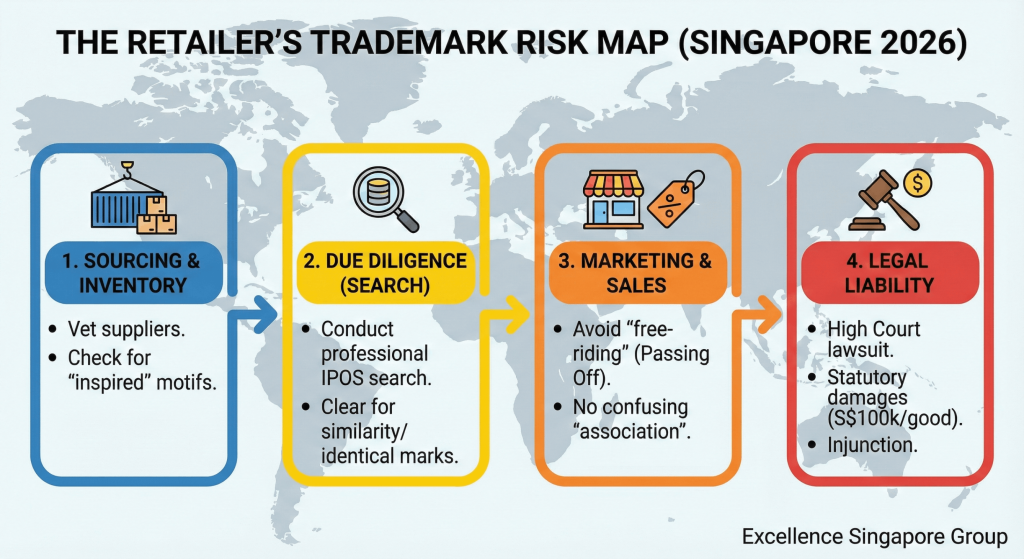
The Lesson for Retailers: Even if you aren’t claiming to be an “Official LV Boutique,” selling items that mimic a brand’s protected symbols can trigger a lawsuit. Under the Singapore Trade Marks Act, a brand owner can seek statutory damages of up to S$100,000 per type of good—even without proving actual financial loss.
2. The “Innocent Dealer” Defense: Sourcing is Not a Shield
ValueMax has denied the allegations, stating they operate as a dealer in second-hand goods (unredeemed pawned items) sourced from various parties. They argue they made no representation that the items were LV goods.
However, from a compliance perspective, the risk is clear: Sourcing is not a legal shield. If you sell a product that infringes a trademark, the brand owner can sue the retailer, not just the original manufacturer. This makes professional trademark search and clearance a vital step for any business dealing in branded or look-alike goods.
3. Passing Off: More Than Just the Logo
The lawsuit also includes a claim of “Passing Off.” This happens when a business suggests an “economic association” with a famous brand, leading to consumer confusion.
In the 2026 retail landscape, where digital marketing and social media sales are dominant, the line between “inspired by” and “infringing on” is thin. Maintaining a clean Compliance History means ensuring your marketing and inventory don’t accidentally “free-ride” on a global brand’s reputation.
4. How to Protect Your Retail Business in 2026
Whether you are a startup or an established dealer, the cost of a High Court battle far outweighs the cost of prevention.
- Audit Your Inventory: Regularly review your SKUs for motifs that closely resemble well-known marks (monograms, hardware shapes, or patterns).
- Verify Your Suppliers: Ensure your supply chain agreements include indemnities against IP infringement.
- Act Before April 2026: If you need to register or amend your own trademarks, remember that a new wave of IPOS fee increases will take effect on April 1, 2026. Filing now will save you significant costs.
Conclusion: A Wake-Up Call for Local Brands
The LV vs. ValueMax case serves as a powerful reminder that global brands are actively monitoring the Singapore market. Protecting your business isn’t just about your own logo; it’s about staying clear of everyone else’s.
Unsure if your products or branding could trigger an infringement claim? Contact Excellence Singapore for a Professional Trademark Clearance Audit.
